
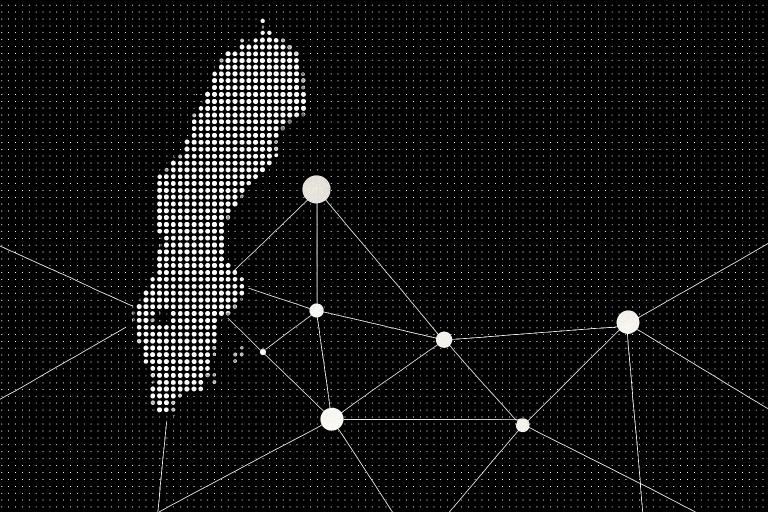
The government has presented Sweden's digitalization strategy 2025-2030 - a clear roadmap that focuses on ensuring that the whole country takes advantage of the opportunities offered by digitalization, while strengthening security and trust. For municipalities and regions, this means both new opportunities and concrete requirements.
A strategy for the whole society
The digitization strategy covers five main areas: digital skills, business digitization, public administration, welfare digitization, and connectivity and cybersecurity. Municipalities and regions are highlighted as key actors - both as providers of essential services and as role models in digital transformation.
What does the strategy mean for local and regional authorities in practice?
1. Increased security and resilience requirements
A common thread in the strategy is that society's resilience to cyber threats must be increased. Municipalities and regions are directly subject to requirements in both cybersecurity and information management, in particular through the NIS2 Directive which is now starting to be implemented in Swedish legislation. This means, among other things:
Stricter requirements for risk management and incident reporting.
Continuous monitoring and documentation of security measures.
To work proactively on training and increasing digital skills for all staff.
2. smoother and safer services for citizens and employees
The strategy states that digitization will simplify everyday life for citizens and make work more efficient for employees. AI and automation will be important tools to meet demands for service and efficiency - for example in social services, schools and healthcare.
3. data-driven leadership and collaboration
Municipalities and regions are expected to work more data-driven and collaborate across borders. This involves sharing data in secure ways, following common standards and creating interoperable systems. In particular, the government points to the need to build in digital processes from the ground up, rather than digitizing analogue procedures.
How can we support you in the transition?
At Easit , we support municipalities and regions in meeting the new requirements in digitization and risk management, through, among other things:
Automated risk management, incident reporting and NIS2 compliance.
Supporting data-driven decisions and more efficient processes through AI-based automation.
Structured tools to increase digital skills and security awareness among employees.
We know that municipalities and regions have different needs. That's why we offer flexible solutions that can be adapted to your size and needs - whether you're in the start-up phase or looking to take the next step in your digital journey.
Executive summary
The digitization strategy for 2025-2030 is clear: municipalities and regions are expected to drive the development towards a more secure, smart and sustainable public sector.
This means investment in technology and skills, but also new opportunities to strengthen trust and deliver better services to citizens.
Want to know more about how our solutions can help your municipality or region meet the new requirements?
Get in touch - we'd love to tell you more!

Henrik Lovén
Chief Commercial Officer
henrik.loven@easit.com
073-525 49 35