
From information chaos to structure — and a platform that enables faster problem solving
Organizations don’t drown in information — they drown in information overload. Emails, meetings, chats, attachments, and verbal updates compete for attention every day. For organizations working with GRC, ESM, or information security, this not only means frustration, but in the worst case scenario, loss of overview and increased risk.
As both demands and pace increase, new ways of collecting, structuring and using information are needed. It is against this background that the work with Easit IO — and the first application, Capture — becomes interesting.
Easit IO: A platform built to solve problems faster
The technology landscape is changing rapidly, and more and more organizations are moving away from rigid systems and long development cycles. They want to be able to adapt faster, build smarter, and shape solutions that reflect their reality — not the other way around.
Easit IO is developed with this in mind:
a stable basic platform where new applications can be quickly built, tested and delivered.
This means that we can go from identified customer problem → to finished solution significantly faster than before. The platform serves as a common architecture for:
data modeling
flows and logic
integrations
security and permissions
user experience
This means that each new application does not have to start from scratch. Instead, what already works is reused, while the solutions can be tailored to specific needs.
Capture is the first application in this new family — but it's far from the last.
Capture: Smarter collection in an era where data quality is everything
Information collection is one of the most critical but most manual parts of many organizational processes. Forms are built from scratch, copied from old templates, or sent as attachments. The results often differ depending on who created what — and this leads to varying data quality.
Capture attacks this in a new way.
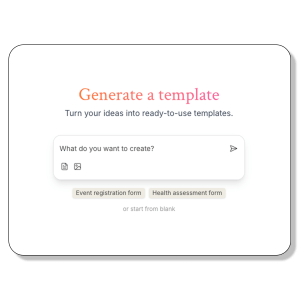
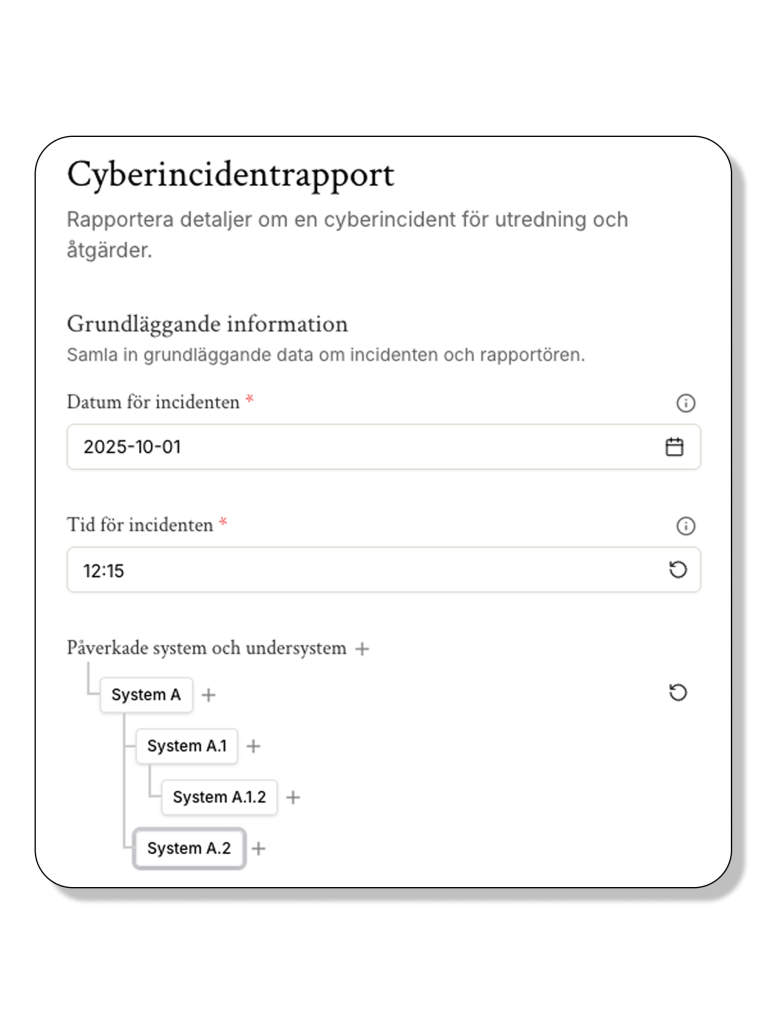
By allowing the user to describe what needs to be collected, the application can automatically suggest a structured form. This drastically reduces the time from need to completed collection. But more importantly, it increases consistency: questions, response types, and flows are built with quality from the start.
And while AI can help generate the foundation, the user is always in control of the content. This means speed without compromising accuracy — an important balance in GRC and ESM where small word choices can make a big difference.
When collection improves, everything downstream improves
Structured collection is not just a step towards efficiency. It is an investment in better control later in the process.
With a modern fundraising solution, organizations can:
-
cleaner and more complete data
-
less manual laying on of hands
-
better opportunity to automate flows
-
clearer basis for risk assessments, analyses and decisions
This makes the entire chain — from first contact to final decision — safer and more predictable.
Safety and responsibility are an obvious part of development
As more solutions are built on top of platforms like Easit IO, the demands on security and sustainable technical architecture also increase. It's not just about handling data correctly, but about providing a secure foundation for all future applications.
Easit IO is therefore developed with:
-
clear data separation
-
high demands on hosting and data storage
-
controlled integrations
-
responsible use of AI
When the platform is secure from the start, every new application becomes secure from the start.
An ecosystem that will grow rapidly
Capture marks the start of something bigger. By building on a common platform, new applications can be developed faster, more stable and more customer-centric than before.
It makes it possible to:
-
solve new customer problems with shorter lead times
-
adapt solutions to industry or area of operation
-
build module by module instead of being forced into monolithic systems
Once the platform is stable, the focus can shift from technology — to real problems and real value.
Conclusion
Organizations don't need more information. They need better ways to manage it.
Easit IO and Capture show a direction where collection becomes easier, data quality becomes higher and solutions can be built faster.
And most importantly: this is just the beginning.
Now that the platform is in place, new applications can be formed quickly — always with the customer's problem as a starting point.